
Ariel Square Four The Iconic Four-Cylinder British Motorcycle
May 11, 2025

 Ariel Square Four The Iconic Four-Cylinder British Motorcycle
May 11, 2025
Ariel Square Four The Iconic Four-Cylinder British Motorcycle
May 11, 2025
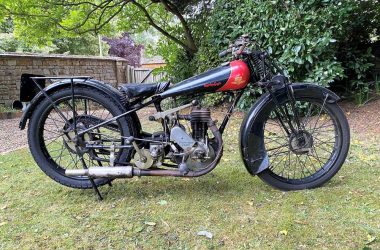 Coventry Eagle Motorcycles The Forgotten Gem of British Bikes
December 28, 2024
Coventry Eagle Motorcycles The Forgotten Gem of British Bikes
December 28, 2024
 A Short History of the Triumph Bonneville – Models, Evolution, and Legacy
October 23, 2024
A Short History of the Triumph Bonneville – Models, Evolution, and Legacy
October 23, 2024
The 1965 Ducati 125cc Four-Cylinder Grand Prix Racing Motorcycle is not merely a remarkable machine; it encapsulates a rich history of ambition, innovation, and the bittersweet realities of motorcycle racing. Sold for an impressive £310,000 at the Bonhams Summer Sale in August 2020, this fabled bike represents a pivotal moment in Ducati’s journey, marked by both technological aspiration and unfortunate timing.

The story of this iconic motorcycle begins in the mid-1950s when Ducati sought to establish itself as a formidable contender in the racing world. Under the guidance of the visionary engineer Fabio Taglioni, the company aimed to develop a four-cylinder motorcycle capable of challenging the era’s giants, including the formidable MV Agusta and the rising Japanese manufacturers. Taglioni, renowned for his pioneering designs, had already made waves in the motorcycle community with his innovative single-cylinder models, but he recognized that multi-cylinder technology was essential for competing at the highest levels.
The project commenced in earnest in 1964, building on Ducati’s existing successes in the 125cc class. The initial model, a twin-cylinder racer, had shown promise but lacked the consistency needed to secure championship victories against the dominant MVs. As Ducati faced significant financial challenges, management became increasingly aware of the need for a more powerful machine to keep pace with emerging competitors. Thus, Taglioni’s decision to develop a 125cc four-cylinder model was both strategic and ambitious.
However, by the time the Ducati 125 four was completed and ready for testing in 1965, the racing landscape had shifted dramatically. Honda had been running a similar machine for nearly two years, and in 1966, they introduced a five-cylinder 125, raising the bar beyond Ducati’s reach. Despite the new bike’s cutting-edge features—such as four valves per cylinder and an eight-speed gearbox—its entry into racing was rendered moot before it could even take to the track. The prototype underwent extensive bench tests and was evaluated positively by former racer Franco Farne, yet it never raced competitively.
Instead, the Ducati 125 four became a staple of motorcycle shows across Europe, making notable appearances at events like the prestigious Earls Court exhibition in London. Its fate took a curious turn when it mysteriously vanished behind the Iron Curtain. Decades later, its engine was rediscovered in a technical museum in Riga, Latvia, while the frame surfaced in former Yugoslavia.
The reunion of these vital components was orchestrated by Giancarlo Morbidelli, a significant figure in motorcycle restoration and design. Morbidelli’s team meticulously rebuilt the machine, demonstrating a commitment to preserving its legacy. Notably, Morbidelli personally crafted the fuel tank, highlighting the dedication involved in restoring this piece of history.
Today, the Ducati 125 four stands not only as a symbol of cutting-edge engineering but also as a poignant reminder of the clash between ambition and reality. Accompanied by a wealth of documentation—including photographs and period literature—the motorcycle reflects Ducati’s innovative spirit and racing aspirations, while also serving as a testament to what might have been.
The fabled status of the 1965 Ducati 125cc Four-Cylinder Grand Prix Racer lies in its blend of pioneering technology and the tragic irony of its timing. It remains an enduring icon of a bygone era, inspiring motorcycle enthusiasts and collectors worldwide. As a unique artefact, it captures the relentless pursuit of excellence in motorsport, symbolizing a legacy that continues to influence Ducati and the motorcycle community to this day. The story of the Ducati 125 four is one of ambition, creativity, and the eternal quest for speed—a narrative that resonates deeply within the world of motorcycle racing.
For more information on the sale of the 1965 Ducati 125cc Four-Cylinder Grand Prix Racer visit Bonhams.com


