
Ariel Square Four The Iconic Four-Cylinder British Motorcycle
May 11, 2025

 Ariel Square Four The Iconic Four-Cylinder British Motorcycle
May 11, 2025
Ariel Square Four The Iconic Four-Cylinder British Motorcycle
May 11, 2025
 Coventry Eagle Motorcycles The Forgotten Gem of British Bikes
December 28, 2024
Coventry Eagle Motorcycles The Forgotten Gem of British Bikes
December 28, 2024
 A Short History of the Triumph Bonneville – Models, Evolution, and Legacy
October 23, 2024
A Short History of the Triumph Bonneville – Models, Evolution, and Legacy
October 23, 2024
Founded in 1905 by John Osbourne, Levis initially set out to manufacture bicycles before pivoting to motorcycles. The company’s foray into two-stroke motorcycles began in 1911, establishing Levis as one of England’s leading manufacturers in this segment. The first Levis motorcycle was created in the Norton works by designer Bob Newey, but it was initially rejected by James Norton. Undeterred, Newey joined forces with the Butterfield siblings—Arthur, Billy, and Daisy—to form Butterfields Ltd. in Birmingham, which would go on to produce the Levis brand. Included in this History of the Levis Motorcycle Company are some sold examples at auction with a price guide of their realised prices at auction.
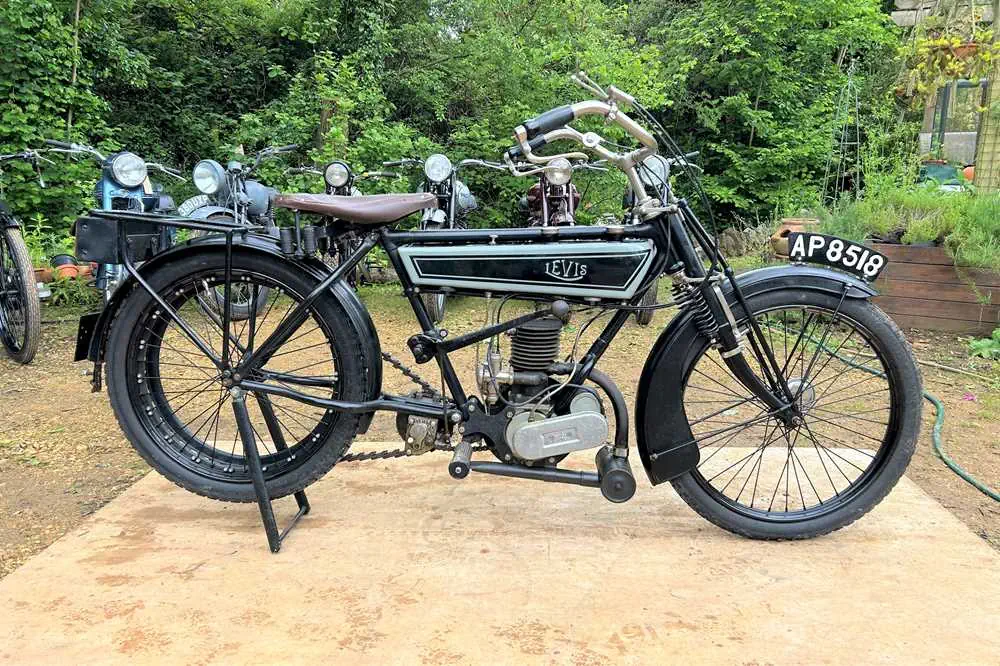
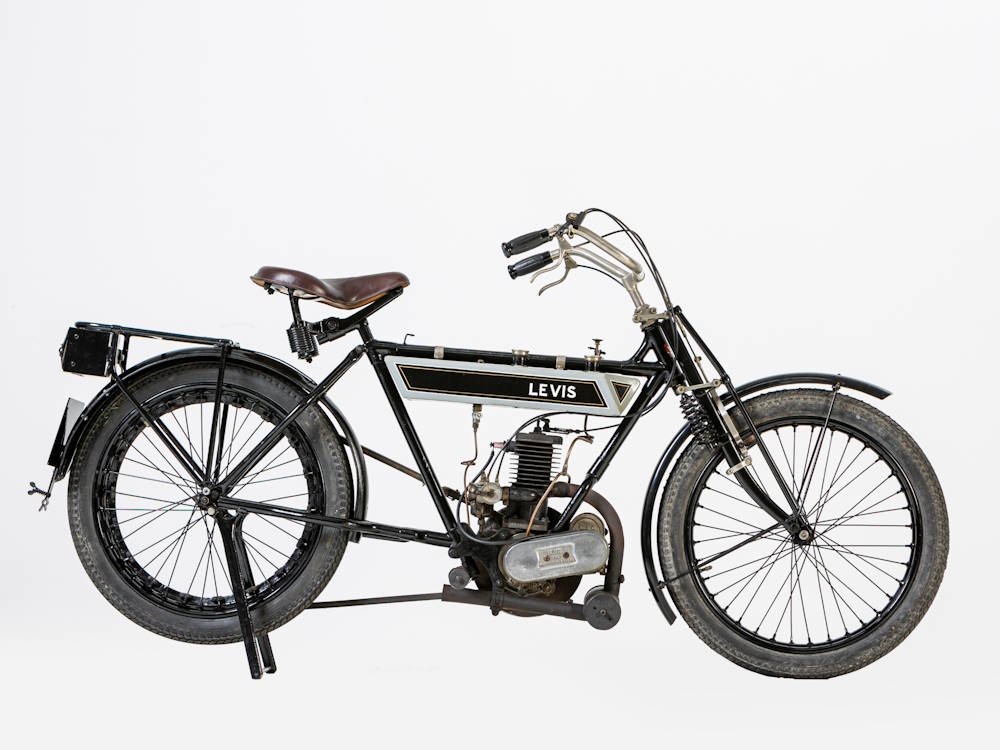
The first successful model, a 211cc two-stroke engine, debuted soon after the company’s inception. By 1916, Levis motorcycles were known for their reliability and performance, with the 211cc engine producing 3 horsepower and a lightweight design that weighed around 120 pounds. This early success laid the groundwork for Levis’s reputation, which was further solidified with their racing achievements. In 1920, Levis made a significant mark at the Isle of Man TT, clinching the top three positions in the Lightweight 250 class with their 247cc machine. Their slogan, “The Master Two Stroke,” became emblematic of their brand.
The company continued to innovate, introducing more models and refining their engineering. In 1928, Levis expanded its lineup to include four-stroke motorcycles, initially offering 247cc and 346cc models. These machines gained a strong following, particularly among off-road enthusiasts. Notable racers such as Percy Hunt and Bob Foster achieved considerable success on Levis motorcycles during the pre-World War II period, showcasing the brand’s competitive edge.
Despite its reputation for quality, Levis faced challenges as the motorcycle industry evolved. By 1940, production ceased due to the impact of the war and shifting market demands. The company briefly merged with HEC when its Station Road facility shifted focus from motorcycles to compressors and motor accessories.
The Levis name lay dormant for decades until its revival in 2014 when it was purchased by David Redshaw. In 2017, Phil Bevan of Bevan Davidson International took the reins, announcing plans to resurrect the brand with modern motorcycles. The first project was a V6 Café Racer, originally intended to utilize a 2.0-liter engine from the Connaught Type D sports car. Although production timelines have faced delays, the revival of Levis represents a continued legacy of innovation and passion in motorcycle manufacturing.
Today, Levis motorcycles are celebrated not only for their historical significance but also for their potential to contribute to the future of motorcycling. With ongoing development efforts, the company seeks to honour its storied past while appealing to a new generation of riders.
Related
British Motorcycles category


