
Ariel Square Four The Iconic Four-Cylinder British Motorcycle
May 11, 2025

 Ariel Square Four The Iconic Four-Cylinder British Motorcycle
May 11, 2025
Ariel Square Four The Iconic Four-Cylinder British Motorcycle
May 11, 2025
 A Short History of the Triumph Bonneville – Models, Evolution, and Legacy
October 23, 2024
A Short History of the Triumph Bonneville – Models, Evolution, and Legacy
October 23, 2024
 The Brough Superior SS80 history and price guide
October 16, 2024
The Brough Superior SS80 history and price guide
October 16, 2024
A recent H&H Classics auction included 6 1920s and 1930s Coventry Eagle Motorcycles so we thought we would take a look at this forgotten gem. In the world of British motorcycles, few brands evoke the nostalgia and craftsmanship of Coventry Eagle. While giants like Triumph and Brough Superior often dominate the spotlight, Coventry Eagle carved a unique niche in motorcycling history, blending Victorian ingenuity with innovative design and practical performance. Based in the industrial heartland of Coventry, the company’s journey from bicycles to motorcycles is a tale of resilience, adaptability, and engineering excellence.
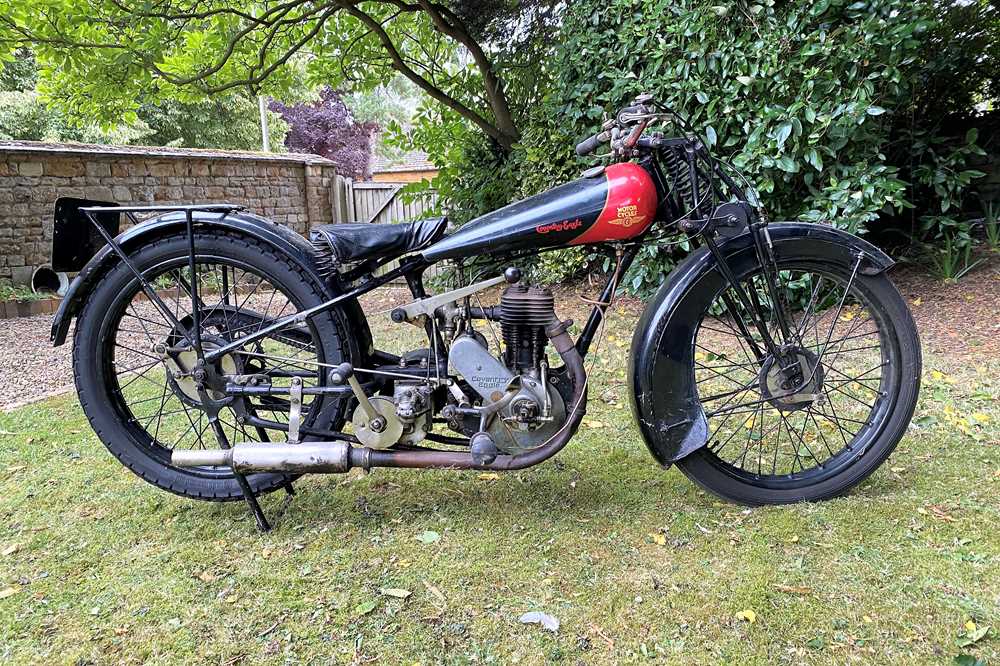
Coventry Eagle’s story began in the late 19th century when it was founded as the Hotchkiss, Mayo & Meek Cycle Company. The company quickly capitalized on Britain’s booming cycling industry, rebranding as Coventry Eagle in 1897. In its early years, it produced bicycles and powered tricycles, reflecting the technological experimentation of the Victorian era. By the early 20th century, Coventry Eagle transitioned into motorcycles, establishing itself as a manufacturer of finely assembled machines that combined proprietary parts with superior finishes.
The 1920s were a defining period for Coventry Eagle. The company introduced its iconic Flying 8 series, powered by 1-litre JAP V-twin engines. These machines were luxurious, fast, and stylish, drawing comparisons to the esteemed Brough Superior. With their striking black finish, cream tank panels, and carmine tank noses, the Flying 8 motorcycles exuded elegance. At the other end of the spectrum, Coventry Eagle produced utility models with pressed-steel frames—a novel approach in England but common in Europe. This innovation offered strength and affordability, appealing to a broader market.
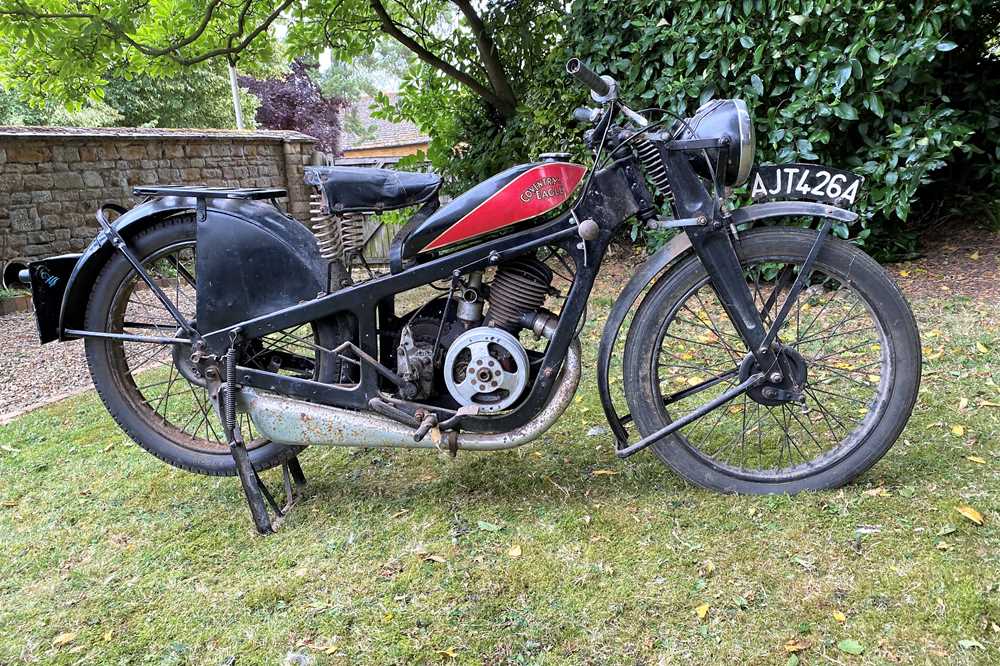
By the early 1930s, Coventry Eagle boasted a diverse range of motorcycles. Models spanned from the lightweight 147cc Villiers-engined machines to robust singles and the high-performance Flying 8s. The company’s traditional finishes and attention to detail set it apart, but the economic hardships of the Great Depression forced a shift in focus. Coventry Eagle prioritized affordable two-strokes, such as the Silent Superb, which featured extensive silencing, luxury specifications, and a price of £23 10s. This model, with its Levis-built engine and legshields for rider protection, became a symbol of value and practicality.
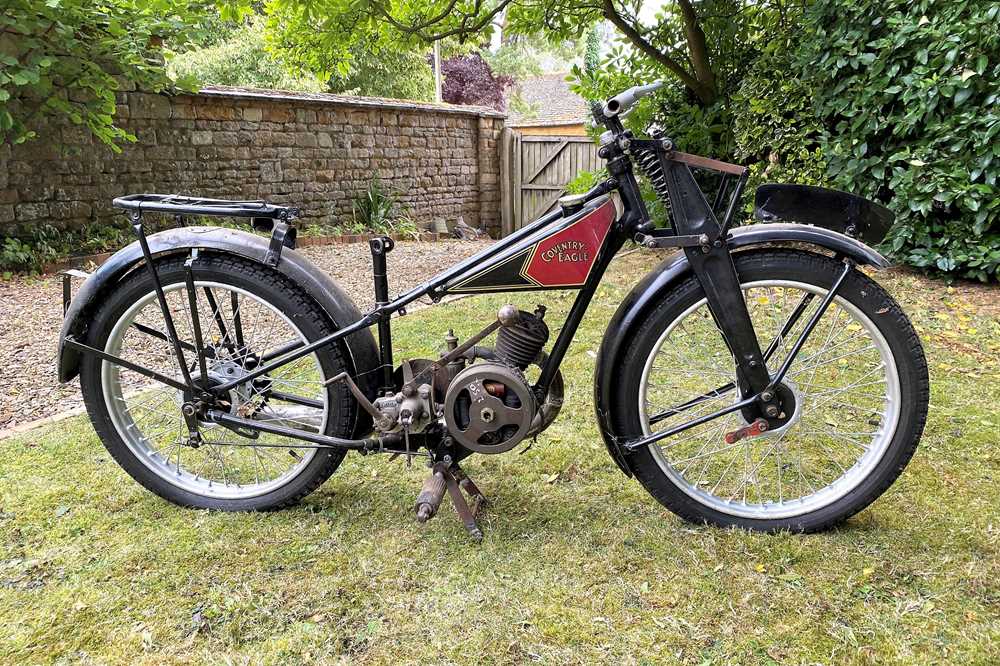
As economic challenges persisted, Coventry Eagle narrowed its range, focusing on what sold best. By 1933, four-stroke engines were phased out in favor of two-strokes, which proved more reliable and economical. The 148cc Wonder and the continued refinement of the Silent Superb series sustained the company during these difficult times. In 1934, Coventry Eagle experimented with 245cc ohv JAP engines, expanding its offerings while maintaining its pressed-steel innovation.
The late 1930s saw the debut of the Pullman Two-Seater models. These machines featured advanced pressed-steel chassis designs with deep channel sections for rigidity, semi-elliptic rear springs, and extensive silencing systems. Although innovative, these models struggled to gain traction in a competitive market.
Despite its innovative designs and strong craftsmanship, Coventry Eagle could not withstand the economic challenges and industry shifts of the late 1930s, leading to the cessation of motorcycle production. However, the Coventry Eagle name lived on, transitioning back to its origins in bicycle manufacturing. In the latter half of the 20th century, the company produced a range of bicycles, including mountain bikes, catering to the growing demand for affordable and accessible transportation and recreational cycling. While these bicycles were mass-produced and targeted a broader audience, they carried forward the brand’s legacy of quality assembly and practical design. Today, Coventry Eagle is remembered both for its luxurious Flying 8 motorcycles and its later contribution to the cycling industry, cementing its place as a versatile and resilient name in British engineering history.


